By Amy Pigeon
In a culture obsessed with productivity, the Italian phrase la dolce far niente—the sweetness of doing nothing—feels almost radical.
Yet across Italy, this philosophy remains an essential part of everyday life.
In the quiet hours of the afternoon, you may see someone seated at a café with no laptop, no meeting, no visible urgency. They sip an espresso slowly. They watch people pass. Time expands rather than contracts.
This pause is not laziness.
It is restoration.
Modern wellness science is beginning to validate what Italian culture has long understood intuitively: the nervous system needs moments of genuine stillness. When the body shifts out of a constant state of stimulation, stress hormones begin to fall. Sleep improves. Skin regenerates more efficiently. Even digestion benefits.
Rest, it turns out, is a beauty treatment.
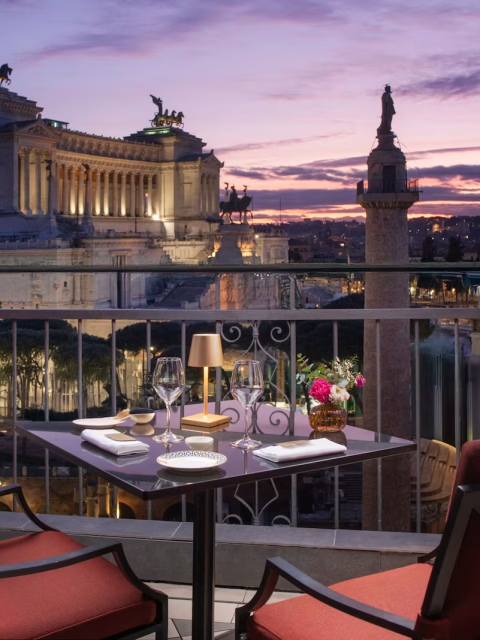
In Italy, these pauses happen naturally—on balconies overlooking the sea, in piazzas warmed by afternoon sun, or during long lunches that stretch without apology.
It is not uncommon to see entire communities slow down at once, honouring the rhythm of the day rather than fighting it.
There is something quietly revolutionary about this.
To sit.
To breathe.
To exist without the need to produce.
Perhaps this is why Italian wellness feels so different from the hyper-optimized routines often promoted elsewhere. It does not demand perfection. It simply invites presence.
And in that presence—skin softening in the sun, shoulders relaxing, laughter echoing across a piazza—the body remembers something important.
Sometimes the most powerful act of care is doing absolutely nothing at all. – VV